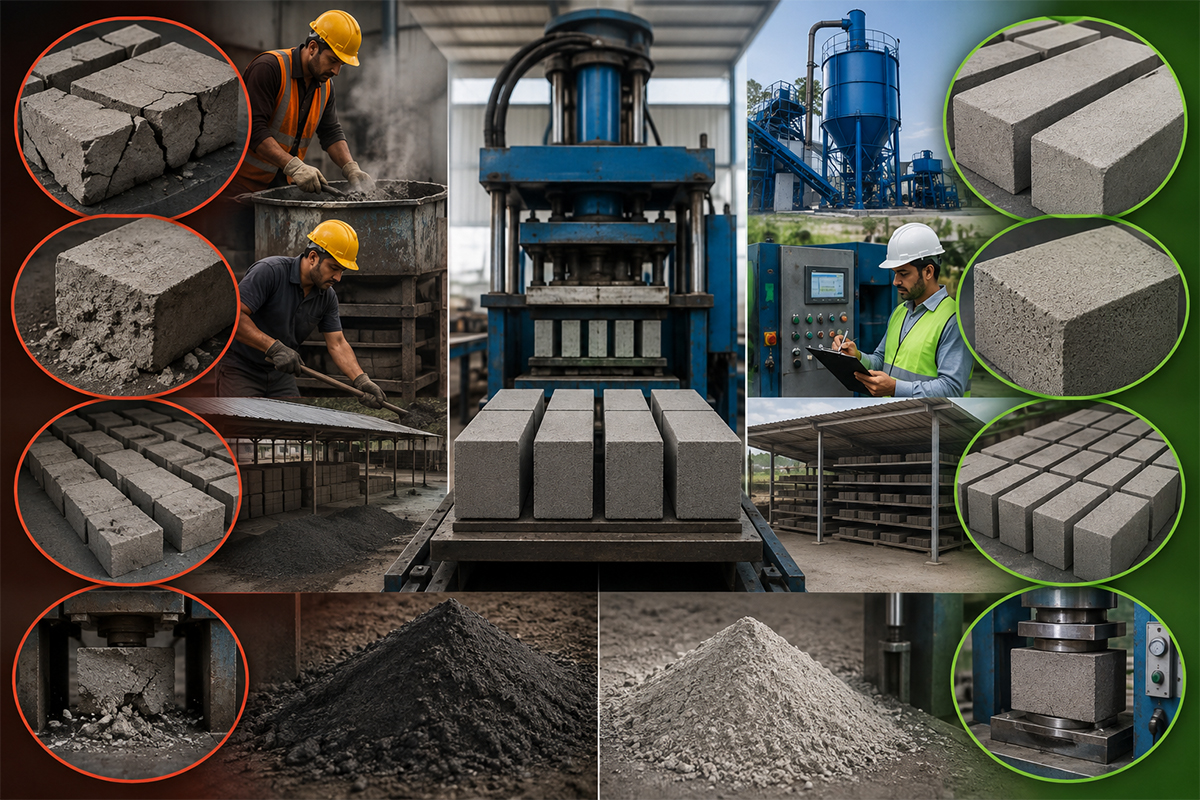
Common Fly Ash Brick Manufacturing Problems and How to Solve Them
Fly ash brick manufacturing requires proper control of raw materials, mixing, moulding, pressing, curing, and handling. Even with a good Fly Ash Brick Machine Manufacturer Coimbatore may face problems that affect brick strength, appearance, production efficiency, and overall quality. Understanding these issues can help reduce waste and maintain consistent production.
Low Brick Strength
Low compressive strength is one of the most common problems in fly ash brick production. It can result from an incorrect raw material ratio, insufficient binding material, poor compaction, or improper curing
Solution : Maintain a consistent mix proportion and ensure adequate pressure during moulding. Proper curing is also essential for developing the required brick strength.
Cracks in Fly Ash Bricks
Cracks may appear during demoulding, drying, curing, or handling. Excessive moisture, poor mixing, incorrect material proportions, and improper curing can contribute to cracking.
Solution : Control the moisture level carefully and ensure all materials are mixed uniformly. Handle green bricks gently and follow a suitable curing process.
Uneven Brick Size and Shape
Inconsistent dimensions can occur when the mould is worn, material feeding is uneven, or machine pressure is inconsistent. Uneven bricks can create difficulties during construction.
Solution : Inspect moulds regularly and replace damaged or excessively worn components. Ensure uniform material feeding and maintain consistent machine operation.
Surface Defects
Rough surfaces, chipped edges, and poor finishing can reduce the appearance and quality of fly ash bricks. These defects may be caused by improper moisture, mould condition, or inadequate compaction.
Solution : Maintain the correct moisture content and clean the mould regularly. Consistent hydraulic pressure can also help produce better surface finishing.
Bricks Sticking to the Mould
Bricks may stick to the mould during demoulding because of incorrect moisture levels, mould contamination, or unsuitable material conditions
Solution : Keep mould surfaces clean and inspect them frequently. Maintaining the correct mix consistency can make demoulding smoother and reduce damage to freshly pressed bricks.
High Material Wastag
Material waste can increase because of incorrect batching, spillage, rejected bricks, and inefficient handling. High wastage can directly increase manufacturing costs
Solution : Use accurate batching methods, maintain the equipment properly, and monitor rejected bricks. Good production planning can help minimize unnecessary material loss.
Inconsistent Production Output
Production may fluctuate because of machine downtime, inconsistent feeding, operator errors, or poor maintenance.
Solution : Follow a regular fly ash brick machine maintenance schedule and train operators in correct machine operation. Monitoring production cycles can also help identify efficiency problems.
Conclusion
Consistent quality depends on controlling every stage of fly ash brick manufacturing, from raw material preparation to final curing. By maintaining correct mix proportions, moisture levels, mould condition, machine pressure, and curing practices, manufacturers can reduce defects and improve production efficiency. Selecting reliable equipment and following proper operating procedures can further support long-term manufacturing performance.