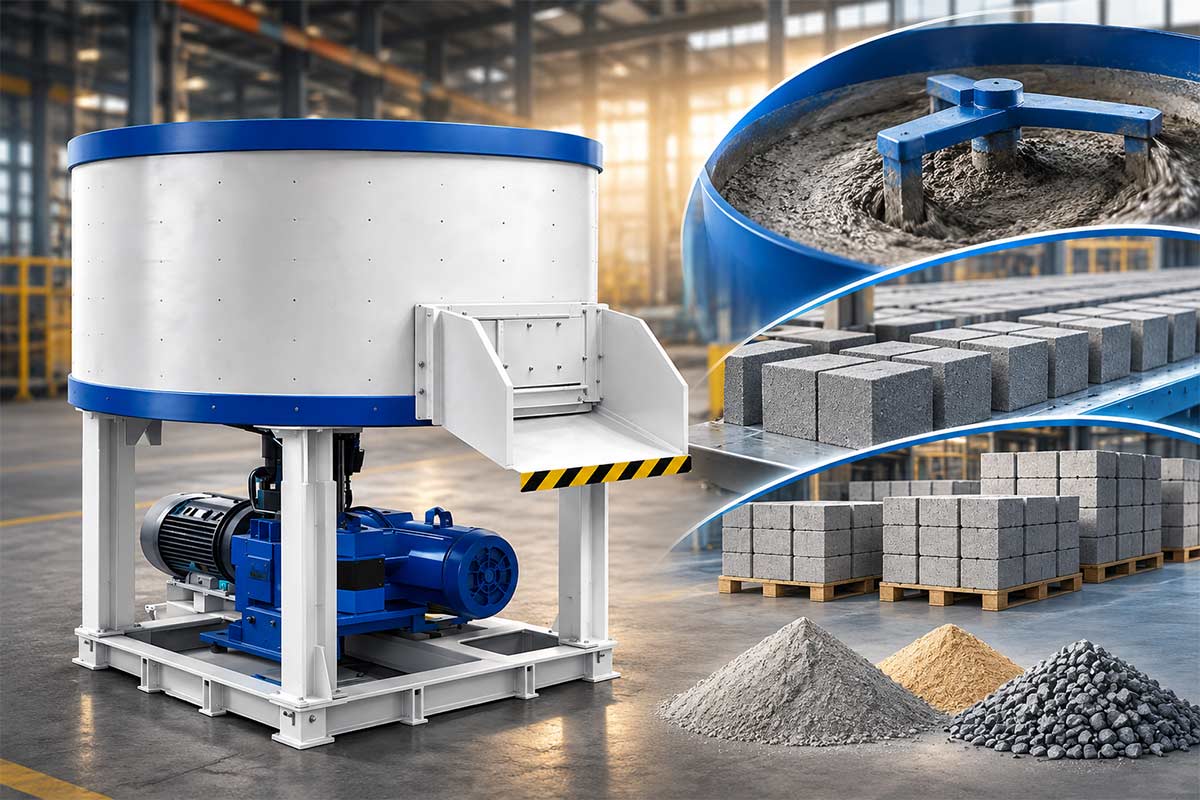
How Pan Mixer Capacity Affects Production Efficiency and Material Quality
Making bricks, blocks and concrete products the quality of the product depends a deal on how raw materials are mixed. That is why I always double‑check the proportions before starting any batch. Cement, sand, aggregates and other ingredients need to be blended to make a mixture. This is where a pan mixer becomes very important. Choosing the mixer is not only about having a mixing machine. The capacity of the mixer can affect production speed, the consistency of the material and the efficiency of operations.
Matching Capacity with Production Requirements
Every manufacturing unit has different production requirements. A small production setup does not need the mixing power as a big factory that makes bricks or blocks. Picking a mixer that's too small can cause many mixing times and slow down work. If the mixer is bigger than needed it can use energy and waste materials.
The correct size helps keep a flow of material going to the next part of making things. When the mixing part works with what the plant needs to produce, workers can stop extra time waiting and make sure everything keeps running easily.
Better Mixing for Consistent Material Quality
Capacity also affects how efficiently materials are mixed. An overloaded mixer might not give room for the materials to move the way they should while mixing. This can cause the cement, the sand and other ingredients to not mix evenly.
Controlling the Production Cycle
When the mixer operates within its capacity the materials blend more evenly. A uniform mixture leads to compaction and enhances the quality of bricks, blocks and concrete products. It also helps reduce differences between production batches making each batch more consistent.
Improving Daily Production Efficiency
Production efficiency is not about making more things in less time. It is also, about cutting down on interruptions stopping materials from going to waste and keeping the output steady. A chosen pan mixer can help manufacturers schedule their mixing times based on the size of their brick making machines or block making machines.
For example different production requirements may need capacities such, as 250 KG, 500 KG or 750 KG. Choosing the capacity depends on how much material is needed and on the production schedule of the unit. When these factors are balanced well the mixing process can keep operations running all day.
Reducing Waste and Production Problems
Incorrect capacity selection can sometimes lead to repeated mixing, material spillage or inconsistent batches. These problems can increase waste. Add extra work, for operators. Choosing a mixer with the capacity makes it easier to handle the correct amount of material in each batch. It also helps keep control over the mixing process.
Regular maintenance is equally important. Keeping the mixing blades, rollers and other components in working condition can help maintain consistent performance over time.
Conclusion
Choosing the pan mixer capacity can really impact how well a business runs and how good the materials turn out. When a company looks at how much it needs to produce each day the size of each batch and what kinds of products are being made it becomes easier to pick a mixer that keeps things running smoothly. A dependablepan mixer manufacturer in Coimbatore can also give help in picking the right mixing solution for the job.